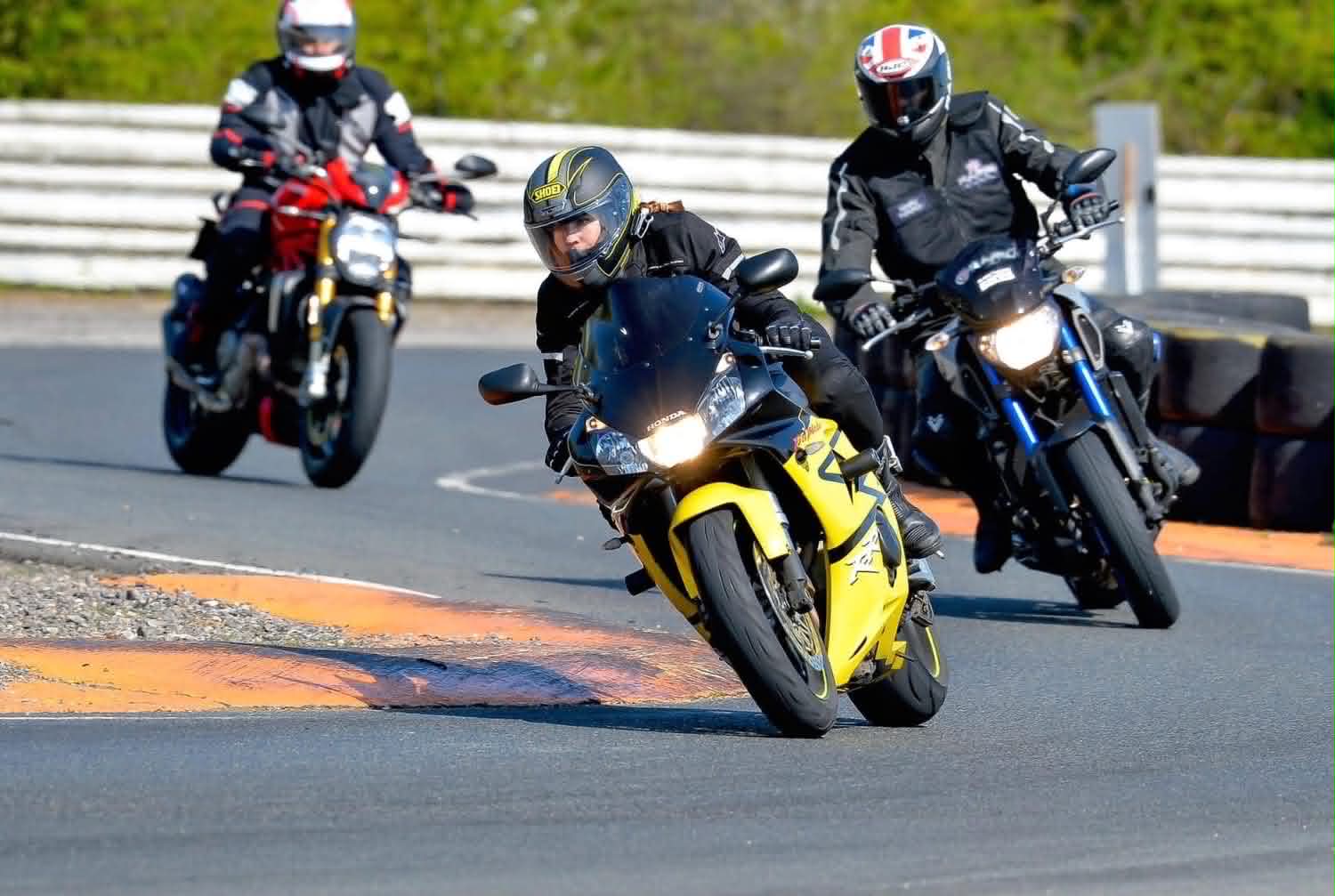
Advanced Motorcycle Training: Track, Off-Road, Adventure and Machine Control Skills
If you want to go beyond everyday road riding, advanced motorcycle training can help you build sharper handling, stronger confidence and better control in specialist environments. Whether you choose track motorcycle training, off-road motorcycle training, adventure bike training or machine control coaching, these courses are designed to improve precision, safety and rider awareness in ways that carry over to real-world riding.
Track Motorcycle Training
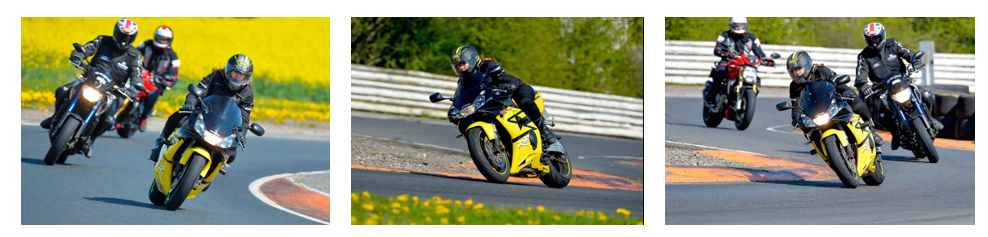
Track motorcycle training gives riders the chance to explore the performance limits of a bike in a controlled environment, without the hazards of public roads. With no oncoming traffic, junctions or unpredictable surface changes, riders can focus fully on technique and machine control.
These courses usually cover body position, braking markers, corner entry and exit lines, throttle application and smooth weight transfer. Under professional guidance, riders learn how to improve stability, corner with more confidence and understand how grip and lean angle work together at higher speeds.
The skills developed on track can translate directly to better road riding. Improved braking control, smoother cornering and stronger awareness of bike positioning can all help create a wider safety margin on twisting roads and in emergency situations.
Off-Road Motorcycle Training
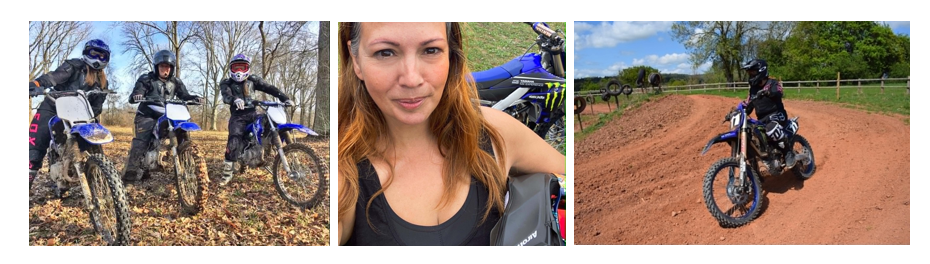
You will master delicate throttle control, standing body positioning, and how to steer using your footpegs rather than the handlebars.
Off-road motorcycle training transforms the way riders understand balance, traction and control. Riding on dirt, gravel, mud and uneven ground teaches techniques that are difficult to develop on tarmac alone.
Stepping off the tarmac and onto loose dirt, mud, and gravel completely rewrites your understanding of motorcycle balance and traction. Off-road motorcycle training teaches you to embrace the bike moving and sliding beneath you, stripping away the panic that road riders usually feel when traction is lost.
These courses often focus on standing riding position, throttle control, clutch balance, braking on loose surfaces and steering with body weight and footpeg pressure. Riders also learn how to stay relaxed when the bike moves underneath them, which is one of the biggest mindset shifts in off-road riding.
This type of training can be especially valuable for road riders because it improves confidence when grip levels change unexpectedly.
Overcoming the challenges of ruts, steep hills, and loose surfaces builds a bulletproof level of core machine control that keeps you calm and stable when encountering road hazards like diesel spills, gravel in bends, or slippery roads, poor weather or sudden loss of traction.
Adventure Bike Training
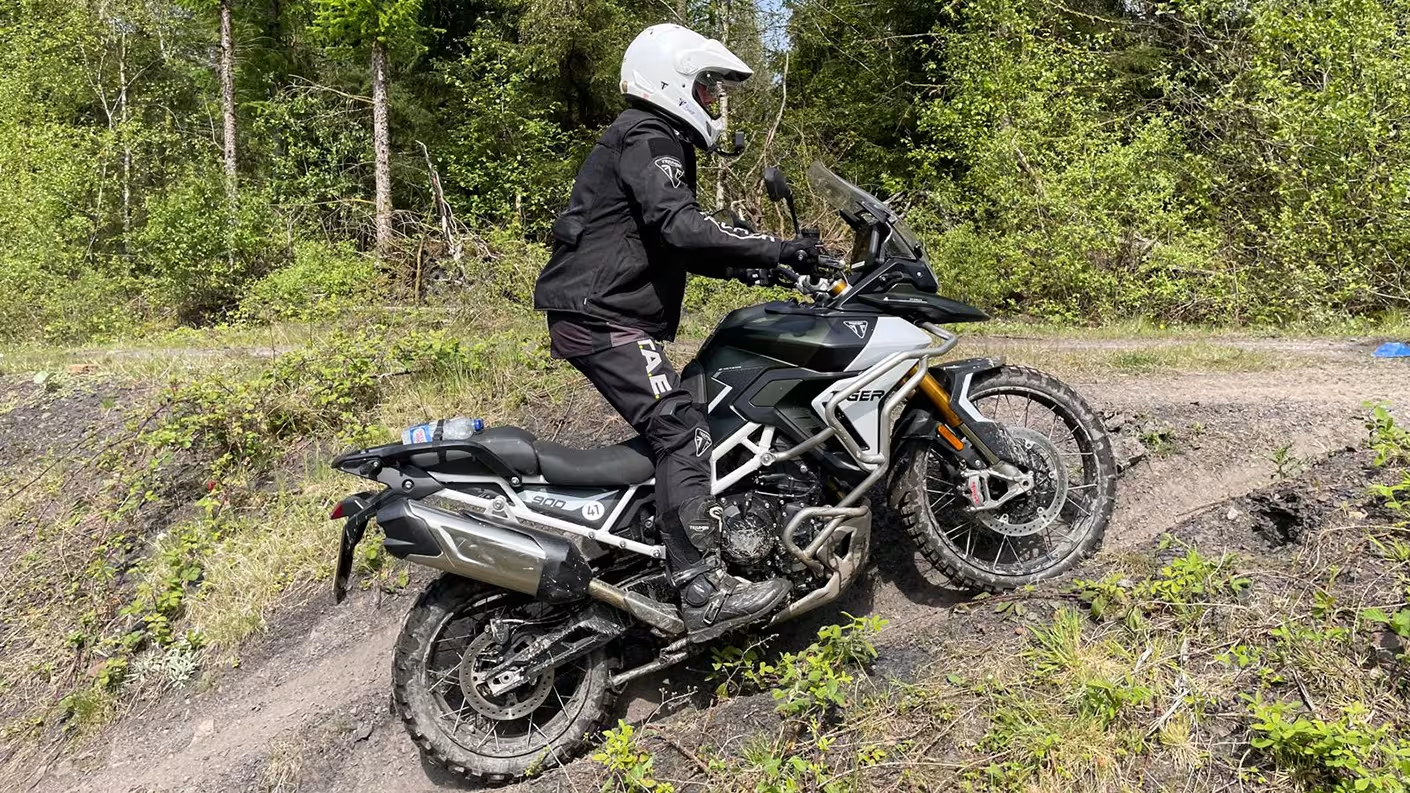
Adventure bike training is designed for riders who want to handle large, heavy motorcycles with more confidence on mixed terrain. These courses are especially useful for riders of loaded touring bikes and large-capacity adventure machines, where balance and slow-speed control are critical.
Training typically includes low-speed manoeuvring, hill control, recovery techniques, body positioning on uneven ground and methods for managing a tall, heavy bike safely. Riders may also learn how to tackle loose surfaces, negotiate obstacles and lift a dropped bike using safer technique.
For anyone planning long-distance travel or exploring unpaved routes, adventure bike training can bridge the gap between road touring and trail riding. It helps riders feel more capable away from the motorway and more prepared for unpredictable conditions unlocking true freedom to tackle remote, unpaved routes around the world.
Machine Control & Extreme Handling
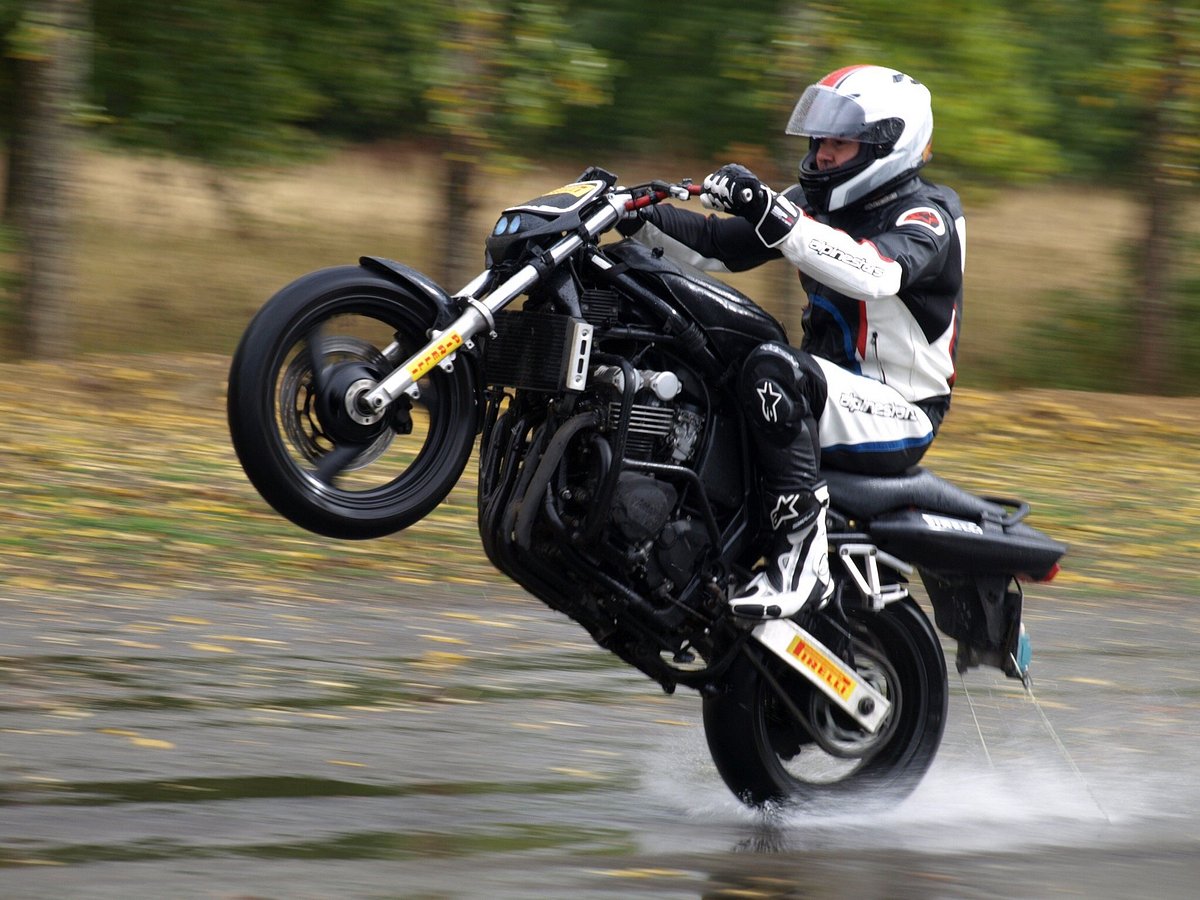
Machine control training is about developing complete command of the motorcycle at both low and high speeds. It can include everything from tight urban manoeuvres to specialist performance skills taught in closed, controlled environments.
Gymkhana and Low-Speed Control
At the precision end of the spectrum, gymkhana and closed-court training focus on clutch control, rear brake use, slow-speed balance and full-lock turns. These are the core skills behind cleaner U-turns, smoother filtering and more confident control in car parks, traffic and tight spaces.
For many riders, this kind of machine control training delivers some of the biggest everyday benefits. It builds confidence, reduces panic at walking pace and helps make the bike feel lighter and easier to manage.
Wheelie Schools
Wheelie schools are highly specialised courses designed to teach front-wheel lift in a controlled setting. Rather than encouraging reckless riding, these schools focus on understanding throttle response, rear brake control and balance point awareness with the support of professional supervision and safety equipment.
For experienced riders, this type of training can improve understanding of weight transfer, traction and throttle precision. It is a niche discipline, but one that can sharpen overall machine awareness when taught responsibly.
Knee-Down Clinics
Knee-down clinics focus on body position, cornering posture and stability at greater lean angles. Usually delivered in controlled environments, these courses help riders understand how to move with the bike more effectively and how to maintain composure when cornering harder.
Although not every rider needs or wants this style of training, it can help performance-focused riders refine their technique and become more deliberate in the way they approach advanced cornering.
Why Advanced Motorcycle Training Matters
Advanced motorcycle training is not only about performance. It is also about building calm, control and better decision-making on the bike. From track riding and off-road coaching to adventure bike skills and machine control training, each discipline teaches riders how to respond more smoothly, read conditions more clearly and manage the motorcycle with greater confidence.
For riders who want to improve safety, expand their skill set or simply feel more capable in challenging conditions, specialist motorcycle training can be a great, and fun, next step.
Have a look at the WomenOn2Wheels Training Hub for training providers in your area, or use the recommender on the Hub to find somewhere that best suits what you are looking for., helping connect you with women instructors, lowered bikes or providers that come with our reader community recommendations.