How Women Riders Can Choose the Right Motorcycle Training School
When we started putting together this rider-training focused edition, we knew we needed to speak to Laura Smith, founder of Women Only Motorcycle Training.
What we didn’t expect was for that conversation to change the direction of our entire August edition. Our conversation below inspired us to create the Wo2W Training Hub, and launch a better training campaign.
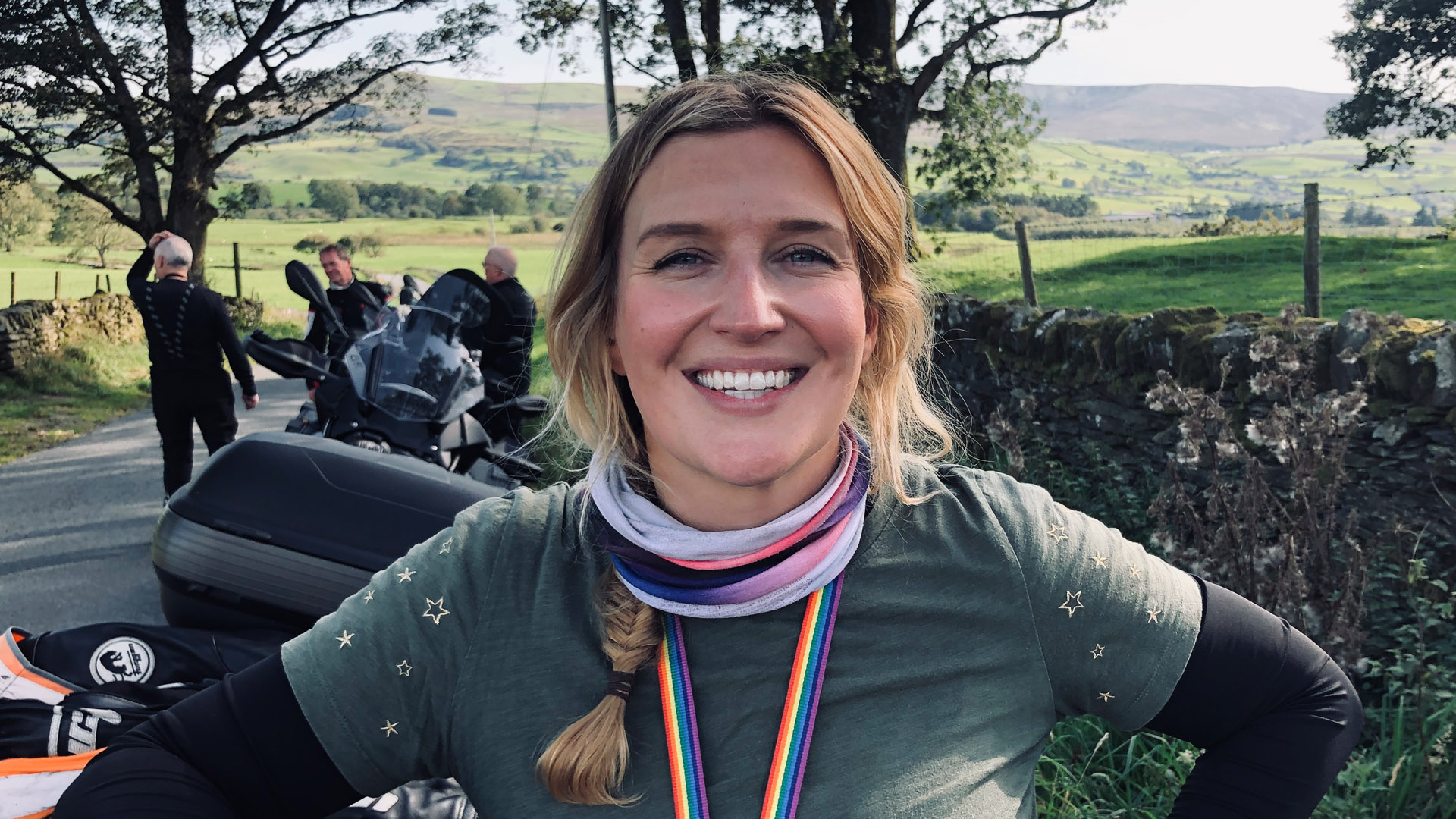
Meet Laura Smith, founder of Women Only Motorcycle Training, WOMT.
Laura is a full-time professional motorcycle instructor specialising in learner and advanced motorcycle training for women. Her training is in high demand, with women travelling from across the country to learn from her. She offers a bespoke approach, helping riders build the skills, control and confidence they need to feel genuinely comfortable on their bikes.
When I first spoke to Laura, I expected to learn more about rider training.
What I didn’t expect was to come away questioning some of my own assumptions about how riders develop — and what good training really looks like.
Several things she said stayed with me.
The first was her observation that women can become some of the most accomplished riders out there, for example our vertically challenged sisters simply can’t fall back on putting a foot down. Instead, they develop exceptional balance, clutch control and machine handling, learning to trust the motorcycle and their skills in a way that many riders never have to.
It was something I had never really considered before.
Why Progressive Learning Builds Better Riders
The second was Laura’s belief in progressive learning. In a world where passing your test as quickly as possible is often treated as the goal, Laura takes a different view. Her focus isn’t simply on helping someone gain a licence; it’s on helping them become a capable, safe and comfortable rider.
That means she doesn’t encourage intensive courses. Instead, she offers pay-as-you-go lessons, with time to practice in between. Everyone learns at their own pace, and Laura tailors her training to the individual needs of each rider. Her students take their tests when they are ready — not because a course timetable says they should be.
That really struck a chord.
I’ve heard from so many women who want to love biking, who have overcome so many hurdles just to get their licence, but who still don’t feel fully confident on the road. Laura’s approach makes a lot of sense: confidence isn’t something you can rush. It is the natural result of knowing you have the skills, experience and support to ride well.
Perhaps the biggest takeaway from our conversation was Laura’s unwavering belief that there is no substitute for quality rider training.
In her view, the skills needed to ride safely and competently are not built through shortcuts, pressure or simply accumulating miles. They are built through expert instruction, purposeful practice and being taught in a way that actually works for you.
And that got me thinking about my own training experience.
Over 30 years ago — ahem — my own route into motorcycling was a little more “gung ho”. It passed in a blur. I don’t believe I really learned very much. I followed the guy in front, tried not to make a fool of myself, and resisted the urge to hoon around on the 400 after more than a year on a 125.
In those days, the test felt like a matter of riding around the block a few times and not colliding with anyone or anything.
So, after speaking to Laura, I started looking more closely at the motorcycle training industry.
And it seems there are some real questions worth asking.
In some schools, the most inexperienced instructors may be the ones delivering CBT training, which means absolute beginners can sometimes receive a compromised first experience. Then there is the question of instructor development itself. There are different routes into CBT instruction, one via formal DVSA assessment and the other via school-based internal assessment.
I am sure many schools are diligent, professional and deeply committed to their students. But with instructor shortages, financial pressures and the reality that training schools are often not highly profitable businesses, it is easy to see how standards could vary.
And then there is the most obvious point of all: being an experienced rider does not automatically make someone a good educator.
Teaching is a skill.
Teaching someone to ride requires machine control, roadcraft and technical knowledge, of course. But it also requires patience, communication, empathy and the ability to explain things in a way that makes sense to the person learning.
For women riders, that matters.
It matters if you are nervous. It matters if you are petite. It matters if you have had a bad experience before. It matters if you are returning to riding after years away. It matters if you simply want to learn in an environment where you feel respected, supported and taken seriously.
What Women Riders Should Look for in a Training School
Not everyone will be lucky enough to live within travelling distance of Women Only Motorcycle Training.
But Laura has written a brilliant guide to help women think more carefully about choosing a training school, instructor and learning environment. Her advice walks through the things to consider before booking, from taster sessions and kit to pace of learning, instructor fit and whether the bikes are suitable for you.
We wanted to share Laura’s article because it does something really important: it encourages women to see training as an investment in themselves, not just a hurdle to get through.
Whether you are thinking about your CBT, working towards your full licence, returning to riding, or wanting to improve your skills, the quality of the training you choose can make a huge difference.
How Wo2W Is Building a Better Training Directory
Originally, we planned to create a nationwide training directory for the Wo2W community.
But after speaking to Laura, we realised that a directory on its own isn’t enough.
A list of names does not tell you whether a school has lower bikes. It does not tell you whether they have women instructors. It does not tell you whether their kit fits a range of body shapes and sizes. It does not tell you whether the instructors are patient, respectful and professional. It does not tell you whether a nervous beginner will be supported or rushed.
So yes, we are building a nationwide directory.
But we are also contacting every company listed and asking them to review their entry. We want to understand what they offer women riders, whether that is lowered bikes, women instructors, accessible facilities, flexible training, supportive teaching styles or simply a genuinely welcoming and professional environment.
And because this is Wo2W, we want to go further.
Help Us Identify the Best Training Providers for Women Riders
Each listing in our training directory includes a link where you can send your own comments, feedback or insights directly to our editorial team.
We would love women riders across the country to help us build a clearer picture of what training providers are really like.
You could visit your local training school and ask some of the questions Laura suggests. You could look at the bikes, the training area, the bathroom facilities, the car park, the range of helmets and gloves, and the general environment. You could speak to the instructors and get a feel for how they talk to potential women customers.
Is it welcoming?
Is it professional?
Would you recommend it to a nervous beginner?
Would you send your daughter, sister, friend or younger self there?
Your feedback will help us identify strong, supportive providers and highlight the schools that are actively engaging with women riders. It will also help us challenge incomplete or unclear listings, and review entries where the experience does not match what women riders need.
Our goal is simple: to help more women find the right training, the right instructor and the right environment to begin — or continue — their riding journey.
Laura’s article below is the perfect place to start.
Top 10 Tips for Women Riders
by womt

Top 10 Tips for women riders thinking of learning to ride…
1. Try before you buy
Lots of training schools now offer 1 hour taster sessions, designed to give you a flavour of riding a motorbike. This is a great way to experience riding for the first time, with the help of a qualified instructor, who can then advise you on your next steps and it can also give you an idea of how you’ll progress to the next steps. If you would like to try a taster session with Laura, drop her a message info@womt.co.uk
2. Research the Training School
Always shop around when looking for a training school. There is a lot of choice out there, so don’t feel restricted to the one that’s most local to you or assume that the one your boyfriend or partner went to will be suitable for you too. A training school website, social media reviews and recommendation from friends can help, but I would also give them a call and have a chat with them too.
3. Learn at Your Own Pace
Learning a new skill takes time and riding a motorbike is no different. A CBT is often advertised as a one day course, but this doesn’t always mean you will complete it in one day. It is not an attendance course, you’ll need to reach the minimum safe standard to be issued with your certificate. It is important to feel safe and confident when riding unaccompanied, so always remember that if you haven’t got your certificate in the day, it will be for your own safety. Women Only Motorcycle Training offer a 2-and-a-half-day-CBT. Click here to find out more.
Intensive courses can also seem like a great way to get your full bike licence quickly, but added time pressures can actually hinder your training. Laying the foundations of basic motorcycle control can have a huge impact on your future riding, well beyond passing your test. Find a school that offers pay-as-you-go training where you can take training at your own pace.
4. Prepare Properly for Your Training Day
Your chosen training school should tell you what documentation you will need to bring with you on the day of your CBT, this includes your driving licence, glasses if you need them for driving or riding, a packed lunch (unless there are facilities on site) and adequate clothing, sturdy jeans (no Topshop skinnies or ripped at the knee) and a pair of boots with ankle protection (but not toetectors). If you haven’t ridden a motorbike before, I would also suggest riding a push bike first, if you don’t have good balance (a skill that we instructors can’t teach you) then you will really struggle riding a motorbike.
5. Choose the Right Instructor
Finding the right instructor for you can make a world of difference. There are lots of personalities out there and it’s important that you get on with your instructor and that they set you at ease. Find an instructor that is going to make you feel comfortable and that can explain things in a way that you understand. Don’t be afraid to change instructors or ask for a specific instructor if it’s going to help you.
6. Make Sure the Riding Kit Fits
Some training schools will provide you with the basic kit. However, the sizes are usually based on the average sized man, so if you’re blessed with small hands, then investing in a pair of well fitted gloves can also make a big difference to your training day. The levers can be adjusted if you’re reach is smaller, but if your gloves are an inch too big then they will just get in the way. Try looking on MotoGirl for a great selection of women’s motorbike gloves and other kit.
Helmets also have an important ‘fit’ factor for obvious reasons, but if you know you’ve got an extra small or large head, an ill fitted helmet can lead to headaches, impaired vision and if it’s too big, not staying on in an incident. If you do decide to invest in a helmet, go and try on as many different ones as you can and don’t buy blindly from the internet. Helmets have a tendency to stretch, so whilst it might feel comfortable at first, after a few wears, it may become too loose. Helmets start from as a little as £60, so there’s choice for everyone’s price band.
7. Check the Bike Is Suitable for Petite Riders
If you’re under 5’4” then some motorbikes (even the 125s) can be too tall, making it feel like an uphill struggle. Even if you can touch the floor (on your tiptoes) it can still be extremely unnerving. Make sure that the training school you choose has the right bike for you, ask them if you can try sitting on it first before you book your first session. If you choose your school wisely they will also adapt the training programme to help you with, gear changing, slow riding, junctions and adverse cambers; all potential barriers with having a smaller frame.
8. Be Careful With Advice From Loved Ones
So you may have friends that already ride or even your significant other who has loads of riding experience. However, they’re not always going to give you the most up to date and suitable advice, especially whilst your still learning to ride. They may have never even completed a CBT, Mod 1 or Mod 2 test, especially if they passed their test a long time ago, so remember your instructor will be best qualified to pitch the training to your skill and ability level.
9. Prepare for Weather Conditions
At the moment most bikers aren’t riding as the weather is cold and windy. Losing concentration and the feeling in your fingers and toes is all too easy. Staying warm in the winter or cool in the summer is vital to your safety. During the winter, make sure to invest in base layers and a neck tube, especially when you’re training (and out all day). Whilst riding through the summer, ensure you drink plenty of water and keep vents open. Whilst training I’d also suggest taking a spare set of clothes in case you get wet! If you’re having trouble finding base layers or neck tubes, I usually look on Amazon , Go Outdoors or SportsBikeShop.com
10. Motorcycle Riders Hub
If you haven’t already heard about Motorcycle Riders Hub and you are planning on booking your CBT or DAS (Direct Access Scheme), why not take a look? I have seen the benefits of my own students using it, even I used it when I was training to become an instructor. It can help set the skills for future training and beyond. Check out their website here www.motorcycleridershub.co.uk
Have a look at the WomenOn2Wheels Training Hub for training providers in your area, or use the recommender on the Hub to find somewhere that best suits what you are looking for., helping connect you with women instructors, lowered bikes or providers that come with our reader community recommendations.
If you enjoyed this article please do check out the rest of the www.womenon2wheels.co.uk site for rider stories, gear reviews, training, maintenance, travel & more