There are people in every community whose names become quietly woven into its story. They are rarely the loudest voices, nor are they usually the ones seeking recognition. More often, they're the people answering emails late into the evening, organising events that everyone else turns up to and enjoys, solving problems that nobody ever sees and giving their time because they believe in something bigger than themselves.
When I spoke to Emma Morter, that was the impression she left on me.
How Curvy Riders Nearly Came to an End
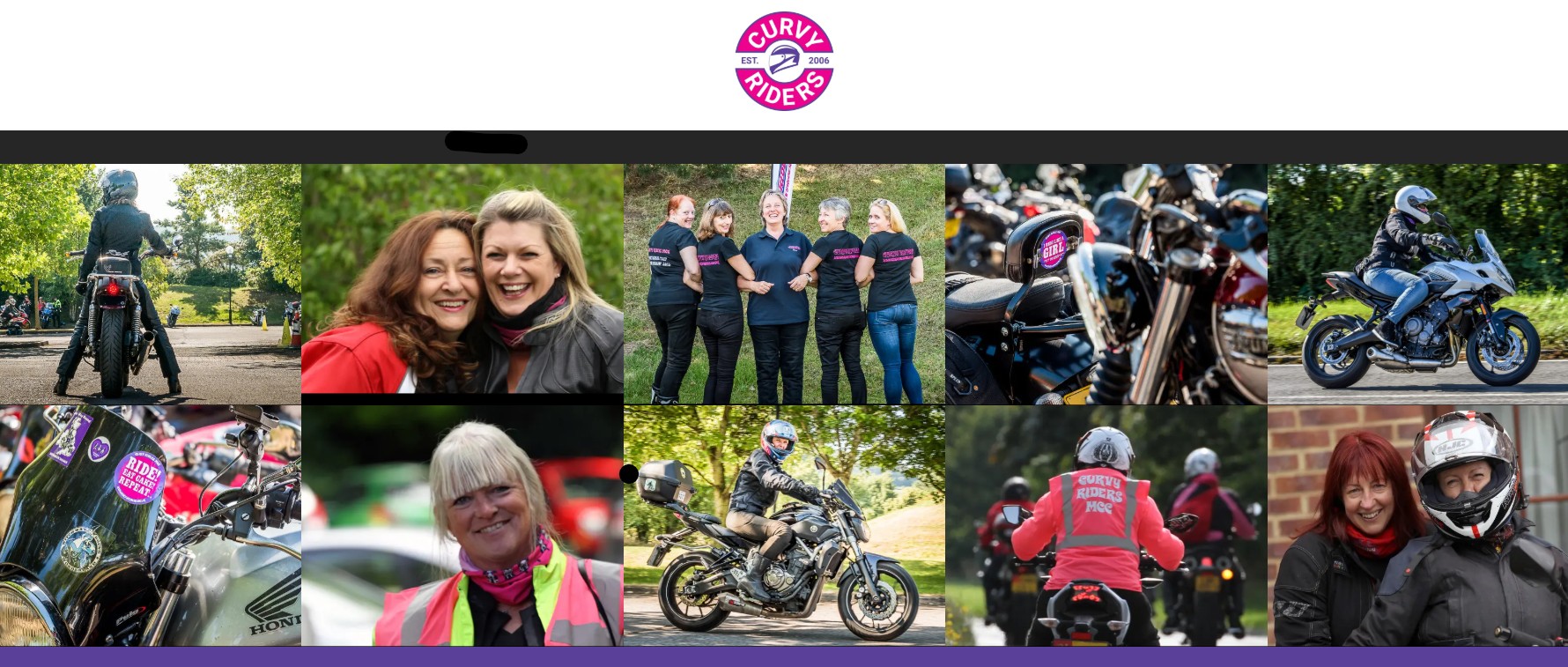
Curvy Riders began life as an online forum created by Ed Crummy and Linz Inglis, who simply wanted to bring women riders together at a time when opportunities to connect were far fewer than they are today. Emma joined about a year later, becoming the Isle of Man regional representative before taking on a wider role within the committee. By then, the club had begun to gather momentum, with regional groups appearing around the country and a growing number of women discovering that they were far from alone in wanting to ride.
Then came the moment that could easily have been the end of the story.
Ed and Linz decided it was time to step away. Their intention was to close Curvy Riders completely.
Emma still remembers how that conversation unfolded.
"A few of us got together and said, 'We can't let the club die.'
"We'd all got something from it," she says simply. "We didn't want to lose it, and we wanted to continue so that other women could get what they'd got from the club."
There was no grand strategy. No carefully planned succession. Just a handful of regional representatives who knew that whatever Curvy Riders had become, it mattered too much to simply disappear.
What they inherited wasn't a polished national organisation. In fact, Emma laughs now as she remembers discovering quite how much work lay ahead. There wasn't much money, very little structure and none of the formal foundations you need to run a national motorcycle club. Insurance, governance, committee responsibilities, venues, annual trips, membership... suddenly all of it belonged to a small team of volunteers scattered across the country.
Long before most of us had ever heard of Teams meetings, they were holding committee calls from kitchens, spare rooms and conservatories, trying to work out how to build something none of them had ever expected to run.
Why Community Matters for Women Learning to Ride
"We always said we were for lady riders, by lady riders,"
Emma explains. "A lot of women wanted somewhere they felt safe to ask what they thought was a stupid question. As far as I'm concerned, there's no such thing as a stupid question."
For many women, learning to ride isn't just about mastering clutch control or slow-speed manoeuvres. Emma has watched hundreds of women begin that journey and, over time, she's come to recognise common barriers.
Some are obvious. Motorcycles are often designed around taller, stronger riders. Seat heights and bike weight play their part.
The other barriers are less visible.
"If I had a pound for every horror story I'd heard about instructors..." Emma says, shaking her head before adding more thoughtfully, "The number of women who felt belittled, scared or made to feel stupid... we never wanted anyone to experience that."
What Emma describes is the value of finding people who understand where you are on your journey. Sometimes that's another woman who's been through exactly the same experience. Sometimes it's simply knowing that someone else once asked the question you're too embarrassed to ask yourself.
Ride, Eat Cake, Repeat: The Culture Behind Curvy Riders
There is, of course, another side to Curvy Riders that anyone who's ever spent time with the club will recognise immediately, reflected in the Curvy motto: Ride, Eat Cake, Repeat.
On the face of it, it's a light-hearted nod to one of motorcycling's universal truths – every good ride is even better with tea and cake. But it also captures something about the atmosphere Emma and the committee worked so hard to protect. There was never any pressure to prove yourself, to ride the fastest or to arrive on the biggest bike. The riding mattered, of course, but so did the conversations afterwards, the laughter over lunch and the friendships that kept people coming back.
Tea, cake and laughter have probably fueled as many Curvy Riders friendships as petrol ever did.
A highlight of each year is the popular Curvies Annual Trip.
"It was hard work," Emma says with a smile. "But it was very rewarding."
For the committee, organising an annual national trip for more than a hundred women wasn't simply a matter of finding a nice hotel and hoping for the best. Venues had to be visited years in advance, routes planned, menus tasted, rooms allocated and an endless stream of practical details quietly dealt with before the first bike ever rolled into the car park.
Emma remembers looking out across the rows of motorcycles during one of the national trips. Adventure bikes stood beside sports bikes, cruisers alongside tourers, little learner bikes parked amongst them.
"Every single one of them had been ridden there by a woman."
"That was probably one of the proudest moments."
Every bike in that car park belonged to someone who had booked a CBT, survived the inevitable wobbles, passed a test, ignored the people who said it wasn't for them and ridden, sometimes hundreds of miles, simply to spend a weekend with women who understood exactly why they loved it.
It's hard to imagine a better picture of what community looks like.
There’s No Such Thing as a “Typical” Woman Rider
Emma laughs when she tells me how often complete strangers have said, "You don't look like a biker."
"What does a biker look like?" she asks.
If twelve years with Curvy Riders taught her anything, it's that there is no such thing as a typical woman rider. Some arrived in their twenties, others after bringing up children. Some had spent years on the back of a partner's motorcycle before deciding they wanted to ride themselves. Others had no previous connection with biking at all. They came from every profession imaginable, every corner of the country and with every kind of motorcycle.
"We had brain surgeons, nurses, accountants, people who did manual labour... every walk of life you can possibly imagine. The one thing we all had in common was that we rode bikes."
I asked Emma how she knew it was time to step back.
After twelve years as Chair, she says, it simply felt like the right moment. The pandemic had been difficult for everyone, her mum had passed away and, like many people who volunteer for years, she recognised that organisations need fresh energy as much as they need continuity.
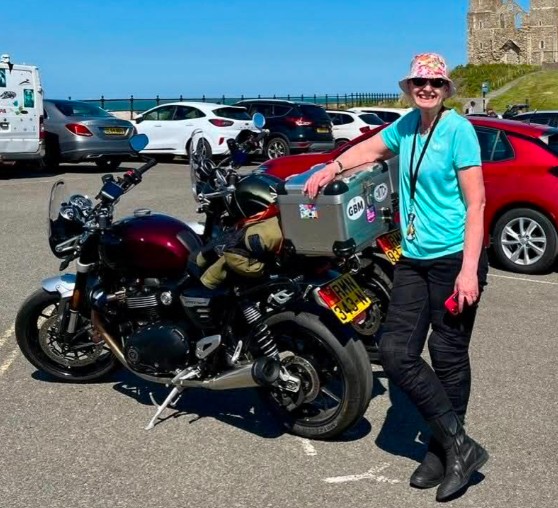
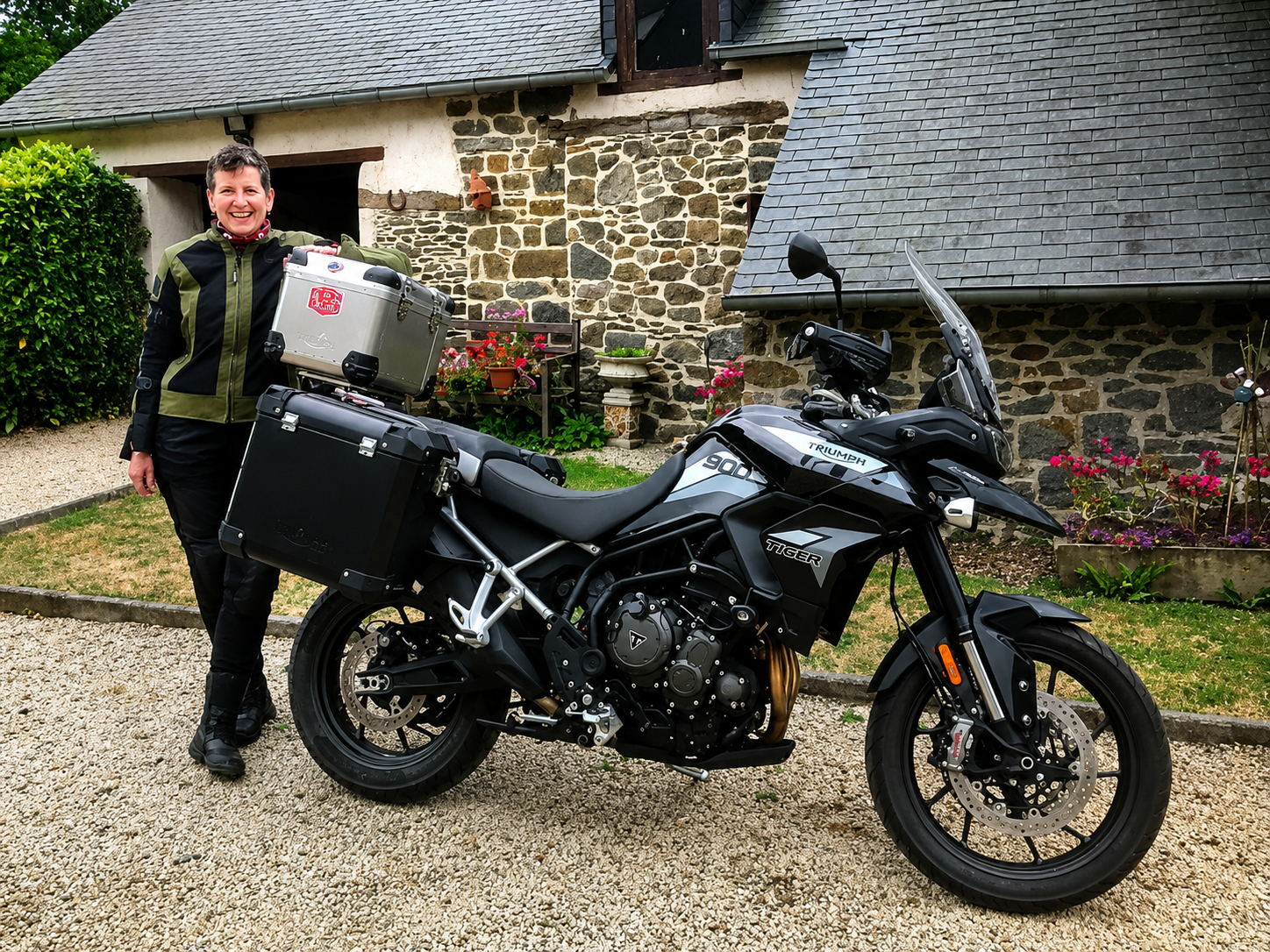
Today she's still a member, still riding and still smiling as she talks about the friendships that have endured. Having recently moved from the Isle of Man to North Yorkshire, the WhatsApp conversations continue, the reunions are already in the diary and, despite no longer carrying the responsibility of chairing the club, she's still very much part of the community she helped preserve.
Emma Morter’s Advice for New Women Riders
Before we finished, I asked Emma what she would say to a woman who is thinking about learning to ride.
Her answer came immediately.
"Do it."
Then, almost instinctively, she returned to the advice that had quietly run through everything we'd talked about over the previous hour.
"Connect with other women... don't be frightened to ask questions."
It's wonderfully simple but important advice. Whether those conversations happen with another rider, a great instructor, a local club or an online community, nobody should feel they have to figure everything out on their own.
She encourages new riders to sit on as many bikes as possible before choosing one, to find a training school that understands women's needs and to accept that learning won't always be easy.
"There will be times when you want to chuck the bike away and walk away," she laughs. "But it's so worthwhile."
A Thank You to the Women Who Keep the Community Going
Throughout our conversation Emma reiterated "It was always the team," and "It was never just me."
The committee members managing the administration, planning and co-ordination, many of whom are still in role. The Regional reps organising ride-outs and manning regional group pages. The members who take the time to answer a nervous new rider's questions without making them feel foolish, or cheer on the big and small milestones.
Helping hundreds of women find their tribe.
The Support Crew at WomenOn2Wheels is a chance for us to say thank you.
Find Out More...
The Curvy Riders Motorcycle Club (MCC) currently has a membership of over 1,100 fully paid members .
It stands as the UK's largest all-female motorcycle club, operating across 44 distinct geographic regions throughout England, Scotland, and Wales.
Full paid membership costs £15 per year, providing official access to private regional networks, club partner retail discounts, and automatic associate membership of the British Motorcyclists Federation (BMF)
If you enjoyed this article please do check out the rest of the www.womenon2wheels.co.uk site for rider stories, gear reviews, training, maintenance, travel & more