The Conversation Inside Your Helmet
There are plenty of places to learn how to ride a motorcycle.
Far fewer explore what goes on inside your helmet while you're learning.
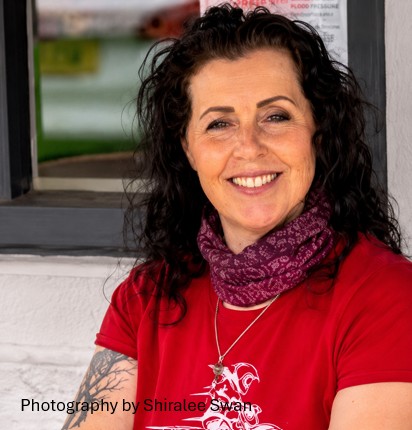
Through Motorcycle Mindset Coaching, Claire helps riders understand why fear, self-doubt and overthinking can sometimes stop them showing the skills they are developing or already have, both while learning to ride and long after passing their test.
"I coach people to manage themselves.
Not instead of training, but alongside it"
Why Confidence Matters as Much as Skill
Claire explained that her work isn't an alternative to rider training—quite the opposite. Claire describes herself as "a strong advocate for training", believing that developing as a rider is a lifelong process. She regularly encourages riders towards additional tuition and motorcycle instructors now refer riders to her when they can see the technical ability is there but confidence is holding them back. For Claire, the two approaches simply work together.
Claire believes two riders can leave exactly the same lesson having learned exactly the same skills, yet feel completely differently about their ability.
It's a subject that became personal when she learned to ride herself.
Claire’s Own Journey Into Riding
Approaching her fiftieth birthday, Claire decided it was finally time to do something she'd always wanted to do. Learning, however, wasn't as straightforward as she'd imagined. She fell off three times during her introductory session and, rather than completing her CBT in a day, it took several sessions. She doesn't see those extra weeks as a setback. If anything, they helped shape the work she does today.
"From similar past experiences, I knew I could learn," she told me. "I didn't think there was anything wrong with me. I just knew I needed more time."
Claire believes many riders personalise experiences like this.
"They think there's something wrong with them, when actually their brain just takes a little longer to join the dots."
Claire believes many of us arrive at rider training carrying expectations, self-doubt and old beliefs about ourselves that have nothing to do with motorcycles. Learning to ride has a way of bringing them to the surface.
Her own experience reinforced something she still believes today: sometimes the answer is simply additional instruction to iron out unhelpful habits. She remembers struggling with right turns until, on an Enhanced Riding Scheme lesson, the instructor noticed she was looking back to the left every time she turned. Once it was pointed out, the problem disappeared.
Other times, though, the challenge isn't technical at all. Riding, she says, is a whole brain, whole body experience, so it's hardly surprising that nerves sometimes become part of the learning process , and can impede the ability to absorb instructions. Much of Claire’s work involves helping riders understand how the nervous system influences confidence, decision-making and performance under pressure.
Claire recalled asking one instructor to stop treating every exercise like a test because the pressure was preventing her from learning properly.
"I didn't want Swiss cheese underneath my foundations," she said. "I wanted a solid brick wall. He happily obliged once I told him what I needed".
It wasn't about making things easier. It was about taking the time to build confidence that would last.
That confidence, however, doesn't mean never feeling nervous.
Despite now having thousands of miles under her belt, Claire admits there are still days when she gets nervous about riding. Rather than forcing herself because she feels she should, she recognises that those feelings deserve attention rather than judgement.
Sometimes she rides anyway because she’s been able to remind herself of what she’s capable of, and the feelings subside. Sometimes she decides that today isn't the right day because she doesn't have the time or headspace to manage the nerves and enjoy it properly.
"I don't want to ride under that kind of pressure."
She also spoke about mistakes very differently to many riders.
She smiled as she recalled riding on a motorway for several minutes with her indicator flashing before she noticed. In earlier riding days, she says, she would probably have replayed the mistake in her head for the rest of the day.
Instead, she reflected on what it had taught her, was grateful that no harm had come from it, and let it go.
"Mistakes with no harm are a gift."
They give us something to learn from.
From Life Coaching to Motorcycle Mindset Coaching
The more we talked, the clearer it became that motorcycles weren't really where this story began.
Before creating Motorcycle Mindset Coaching, Claire was already helping people navigate significant personal challenges through YourOneLife, her weight management coaching business. Although the conversations centered on very different subjects, she found herself hearing the same doubts time after time.
"Why can't I do this?"
"Everyone else seems to manage."
"Maybe I'm just not capable."
Then she learned to ride. In the riding community she discovered the same support was needed, only now the conversations surrounded whether they'd ever master slow-speed control, wondering if they were the only one who still dreaded roundabouts, were always at risk of dropping their bikes or convincing themselves they simply weren't good enough.
Claire's outlook has been shaped by experiences well beyond motorcycling. Before becoming a life coach, she spent many years in senior NHS management, including being responsible for risk management and she also served as an on-call firefighter from 2012-16. There were two roles where calm decision-making, assessing risk and supporting people through difficult moments are simply part of everyday life. That combination of coaching, healthcare, risk management, emergency response and motorcycling has given Claire a perspective that few people occupy. It has given her a deep understanding of how people think, respond under pressure and assess risk.
"The expectation is that nervous feeling is going to go away," she said. "But for many people it never does. The difference isn't whether those feelings appear—it's understanding what they're trying to tell us"
Claire explained that our brains are remarkably good at protecting us, but they don't always distinguish between a genuine danger and a remembered experience or a hard-wired primitive response. A rider who once dropped their bike attempting a U-turn, frightened themselves on a wet bend or failed a riding test may naturally become more cautious the next time they face a similar situation. The nervous system responds to protect by stiffening and hyperfocusing on the threat, the exact opposite of what is needed for calm, safe riding.
The problem then develops when caution quietly becomes avoidance. Rather than suggesting riders ignore those feelings or simply "push through", Claire encourages them to become curious instead.
Is this a genuine risk?
Is it a gap in my riding skills that more training could address?
Or is my brain trying to protect me because of something that's happened before?
It's a subtle difference, but an important one. Good risk assessment isn't about pretending we're fearless; it's about understanding what our instincts are really telling us and making decisions based on today's circumstances rather than yesterday's experience.
It's also why Claire continues to champion rider training so passionately. Developing our skills gives us more options. Understanding ourselves helps us know when and how to use them.
Why Support From Other Riders Matters
Those conversations eventually grew into the Motorcycle Mindset Mastery Facebook community, where riders could share their experiences and ask questions without fear of judgement. A safe space where they can access both professional and peer support.
Someone admits they've failed Mod 1 again. Someone else shares they still avoid a particular junction because it knocked their confidence months ago. Another rider apologises for asking what they think is a silly question.
Within minutes, the responses begin to appear.
"I did exactly the same."
"Thank goodness someone else has said it."
That sense of shared experience confirmed something Claire had suspected all along. Riders weren't struggling because they lacked determination or courage. More often than not, they simply believed they were the only one finding something difficult. Time and again, riders tell Claire the same thing.
"I thought it was just me."
As the community grew, so did the number of riders looking for something they could return to in their own time. Not everyone uses Facebook, and not everyone wants or needs one-to-one coaching. Writing her book, 'Remember You're a Rider' was a natural next step, giving riders another way to explore those conversations whenever they needed them, whether that was after a disappointing lesson, before a test or simply after one of those rides that leaves you questioning yourself.
Interestingly, Claire told me the book has also found an audience among motorcycle instructors, who have said it is helping them better support their students.
As our conversation came to an end, I asked Claire one final question.
If she could whisper one thing into every rider's helmet, what would it be?
Claire smiled.
"Remember you're a rider.
Trust your training, understand yourself and never stop learning"
Find Out More
Read Claire's book - Remember You're a Rider: The Mindset Guide for New and Nervous Motorcycle Riders
I first read Claire's book before we spoke. More than 30 years after passing my own test, with experience on road, off road and track, I still found so much that resonated and challenged the way I think about riding so I definitely recommend it
Take Claire's Motorcycle Rider Mindset quiz where you can answer 13 questions to find out your suggested next steps to support you wherever you are on your riding journey.
Watch out for regular WomenOn2Wheels contributions over the coming months. Claire has some exciting collaborations with Industry leaders, and new initiatives due to launch later this year.