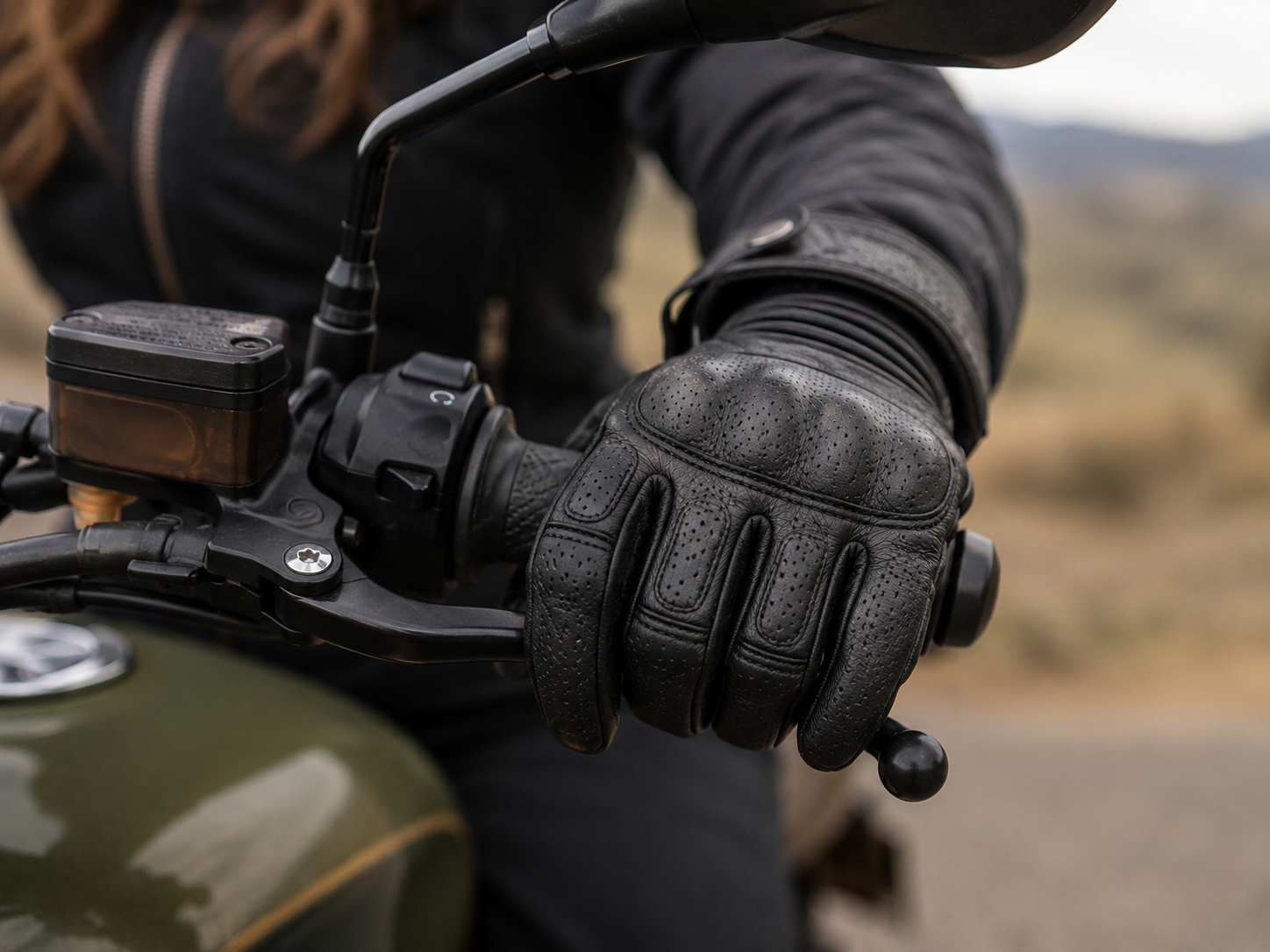
When it comes to motorcycle safety, few things are more important than your brakes.
Whether you're filtering through traffic, enjoying a weekend ride or practising slow-speed manoeuvres in a car park, your ability to stop safely and predictably is something you rely on every time you ride.
The best brake check isn't looking at the bike—it's learning what your brake lever and pedal normally feel like. Once you know that, you'll notice when something changes.
Some maintenance jobs are ideal for riders to learn themselves. Brakes are slightly different. Checking them? Absolutely. Understanding them? Definitely.
But if you notice a spongy brake lever, fluid leaks, grinding noises, cracks in a brake disc, brake warning lights and sudden changes in braking performance, then it's best to get the bike checked by a qualified mechanic.
There is no shame in asking for help when it comes to safety-critical systems.
Before Every Ride: The Five-Minute Check
✓ Squeeze the front brake lever
✓ Press the rear brake pedal
✓ Check the brake light
✓ Look for any obvious leaks
Once a Month: The 15-Minute Health Check
✓ Check brake fluid levels
✓ Inspect visible brake pads
✓ Inspect brake discs
✓ Check brake lines for damage
✓ Make a note of anything that looks different
Brake Fluid and Lines
If the resistance feels different when you squeeze the brake lever, an issue with your brake fluid or brake line could be the culprit.
Brake fluid is what transfers the force from your hand or foot to the brakes at the wheel. When you squeeze the lever, pressure travels through the fluid and tells the brakes to start working. Over time, brake fluid absorbs moisture and becomes less effective.
Brake lines carry the brake fluid between the controls and the brakes themselves. Visually inspect them for cracks, damage, and fluid around fittings. Brake fluid leaks should always be taken seriously.
Locate the brake fluid reservoirs on your motorcycle and check that the fluid level sits between the minimum and maximum marks and appears reasonably clear.

If the level has dropped significantly or the fluid looks very dark ask your garage to inspect it. You can top it up yourself, but its really important that air doesn't enter the system, especially if you have ABS so if you want to do this in the future its worth asking your garage mechanic to show you. normal servicing intervals will usually suffice for maintaining your levels, so really you are checking for a leak.
Brake Pads and Discs
Brake pads are the parts that physically grip the brake disc to slow the bike.
Every time you brake, a tiny amount of pad material wears away, so eventually they need replacing.
You should look to see that there is plenty of pad material remaining and even wear across the pad with no obvious damage. From the right angle (usually looking at the brake calliper from the front) you should be able to get a clear view of the pads where they contact the disc. If there’s less than two millimetres of friction material projecting off the backing plate you will need new pads.
At your service ask how much life is left in your brake pads and make sure they show you where to look to keep an eye on further wear.

Brake discs are the metal discs attached to the wheels that the brake pads grip. Check these for deep grooves, cracks, significant rust and obvious damage.
If you feel a pulsing sensation through the brake lever when braking, have the bike checked by a professional.
What about ABS?
The majority of bikes are now fitted with ABS (Anti-lock Braking System). ABS helps prevent the wheels from locking during hard braking.
If you've ever felt a pulsing sensation through the lever during an emergency stop, that may have been the ABS working.
ABS can be particularly valuable in wet weather, poor road conditions and helps stabilise your braking in unexpected emergency situations